
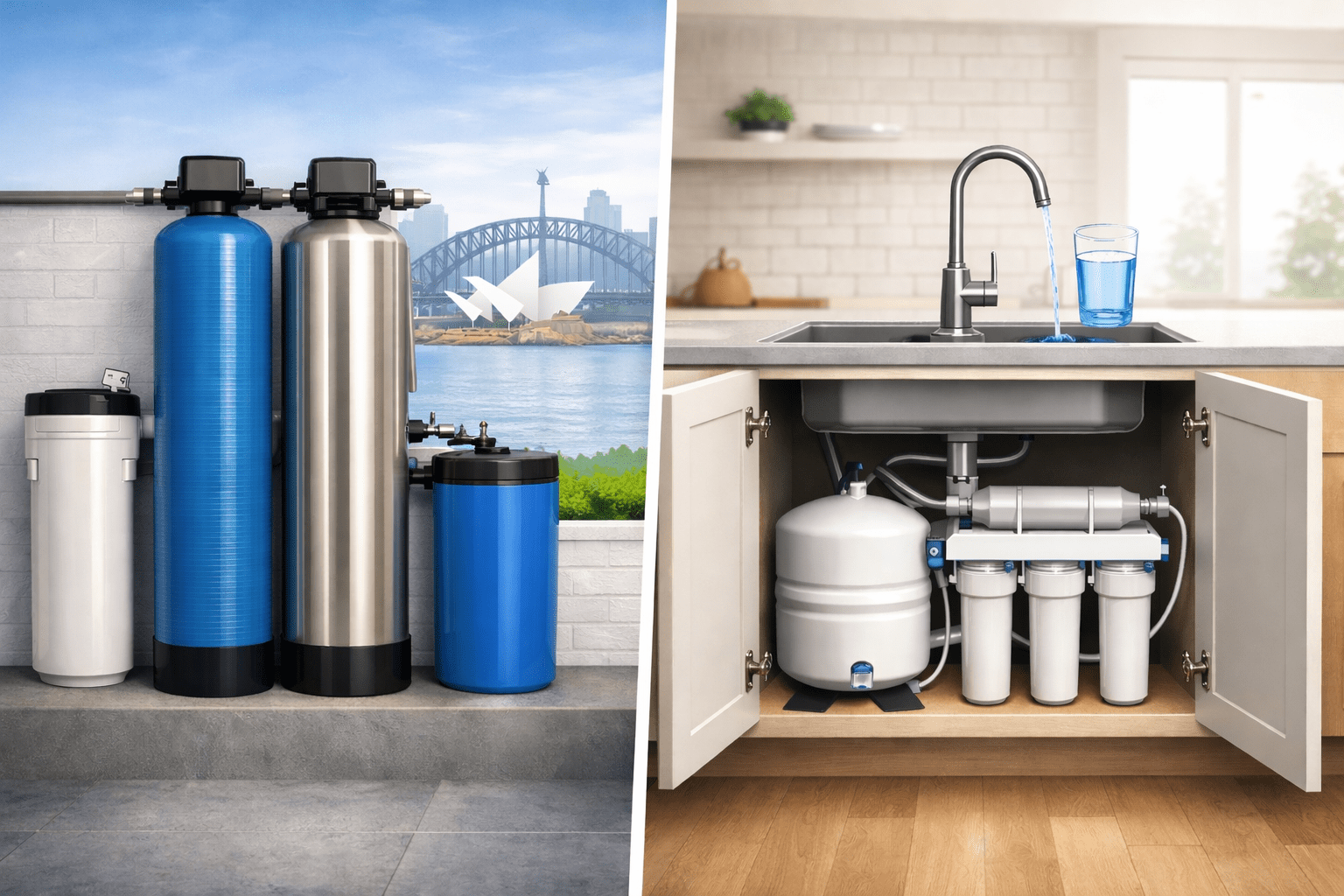
Water quality is a major concern for Sydney homeowners. While municipal water is treated to meet safety standards, it can still carry heavy metals, dissolved solids, and trace contaminants that affect taste, health, and appliance longevity. When choosing between these two filtration technologies, understanding how each handles heavy metals and other impurities is essential to making the right decision for your home.
In this guide, we compare these systems specifically for heavy metal removal, plus their roles in overall water improvement. Whether you’re dealing with high iron, lead, arsenic, or simply want better-tasting tap water, this article will help you choose the best filtration solution for your Sydney home.
What Is a Whole House Water Filter System?
A whole-house water filter system treats water at the point it enters your property. This ensures that all taps, showers, laundry facilities, and appliances receive filtered water. These systems typically use multiple stages of media to trap sediments, reduce chlorine taste and odour, and remove larger contaminants, such as rust and scale.
Benefits of Whole House Filtration
- Protects plumbing, taps, and appliances from scale and deposits
- Reduces sediment, sand, and rust particles
- Improves water clarity throughout the home
- Helps remove chlorine and organic chemicals
- Enhances bathing and laundry experiences
However, while a whole-house filter can reduce some heavy metals, depending on the media used (such as specialised carbon or KDF), its primary design is to treat broad contaminants and improve water quality for household use, rather than focusing solely on dissolved metals.
What Is a Reverse Osmosis Water Filter?
A reverse osmosis water filter is a point-of-use system usually installed under the kitchen sink. It forces water through a semi-permeable membrane, removing up to 99% of dissolved solids, including heavy metals, nitrates, fluoride, chlorine by-products, and other microscopic contaminants.
Reverse osmosis systems often include:
- Pre-filters to remove sediment
- Carbon filters to reduce chlorine and taste issues
- RO membrane for heavy metal and TDS removal
- Post-filters to refine flavour
This multi-stage process makes reverse osmosis one of the most effective technologies for reducing heavy metals in drinking water.
Heavy Metals: What They Are and Why They Matter
Heavy metals such as lead, cadmium, mercury, and arsenic can enter water supplies through old plumbing, industrial contamination, or natural geological sources. These metals can pose health risks when consumed over long periods, particularly for children and vulnerable individuals.
Even trace amounts can impact taste and water quality. That’s why Sydney households concerned about heavy metals often look beyond basic municipal treatment to advanced filtration options.
Heavy Metal Removal: How These Systems Compare
Here’s how the two technologies compare when it comes to heavy metal removal:
Whole House Water Filter System
- Treats all water entering the home
- Improves overall water quality
- Can reduce some metals depending on the filter media
- Not always optimised for dissolved heavy metal removal
- Best for broad-spectrum contaminant control
Reverse Osmosis Water Filter
- Targets dissolved solids and microscopic contaminants
- Highly effective at removing heavy metals
- Installed at the point of use (e.g., drinking water tap)
- Complements whole-house filtration for complete protection
When comparing these approaches, reverse osmosis stands out for heavy metal removal. Nevertheless, the best approach for many Sydney homes is a combination: whole-house filtration for general water quality and a reverse osmosis system for safe drinking water.
Why Many Sydney Homes Use Both Systems
Sydney’s water quality varies by suburb; older infrastructure in some areas can contribute metal traces, while rainfall events and seasonal changes can affect clarity and taste. As a result:
Full Home Protection Includes:
- Whole-house filtration to reduce sediments, chlorine, and protect appliances
- Reverse osmosis system at drinking water taps for heavy metal and dissolved solid removal
This layered approach ensures every tap delivers improved water quality, with the most sensitive use points receiving the highest level of purification.

When to Choose Each System
Choose a Whole House Water Filter If:
- You want better water quality throughout your home
- You care about removing sediments, chlorine, and large particles
- You need to protect appliances and plumbing
- Heavy metals are not a primary concern at all taps
Choose a Reverse Osmosis Water Filter If:
- You want the best drinking water quality
- Heavy metal removal is a priority
- You want reduced dissolved solids and improved taste
- You need a point-of-use solution for cooking and drinking
In many cases, combining both systems provides comprehensive coverage, whole-home filtration plus targeted heavy metal removal at drinking points.