

Fluoride has been added to Australian drinking water for decades to support dental health, yet many homeowners still ask the same question: Is fluoride safe? While public water supplies meet national guidelines, concerns remain around long-term exposure, taste, and individual health preferences. As a result, more Sydney households are exploring advanced filtration options to take control of what’s in their drinking water.
This is where reverse osmosis filtration stands apart from standard water filter systems. Whilst many filters improve taste and remove chlorine, reverse osmosis is one of the most effective residential filtration methods for reducing fluoride at the molecular level.
Why Is Fluoride Added to Drinking Water?
Fluoride is added to town water to help reduce tooth decay across the population. In Australia, fluoride levels are regulated and monitored, with health authorities considering it safe at controlled concentrations. However, fluoride isn’t naturally present in all water sources, and some households prefer to limit their intake due to personal, dietary, or health considerations.
As awareness grows, so does interest in filtration systems that allow families to decide what stays in their water.
Is Fluoride Safe for Everyone?
When asking “Is fluoride safe?”, the answer depends on dosage, individual sensitivity, and cumulative exposure. Fluoride can come from multiple sources, including toothpaste, food, and beverages, not just drinking water. Some people prefer to reduce their intake, particularly in households with infants, pregnant women, or those managing certain health conditions.
Whilst standard water treatment ensures safety compliance, it doesn’t offer choice. That’s why many Sydney homeowners explore filtration options that allow them to tailor their water quality.
Why Most Water Filters Don’t Remove Fluoride
Not all filtration technologies work the same way. Many common water filter systems, such as carbon filters, are excellent for removing chlorine, improving taste, and reducing odours. However, fluoride is a dissolved inorganic compound, making it far harder to remove.
Filters that struggle with fluoride:
- Basic carbon filters
- Jug and bench-top filters
- Standard whole-house carbon systems
These systems improve water quality but aren’t designed to capture fluoride ions effectively.
What Reverse Osmosis Removes That Other Filters Can’t
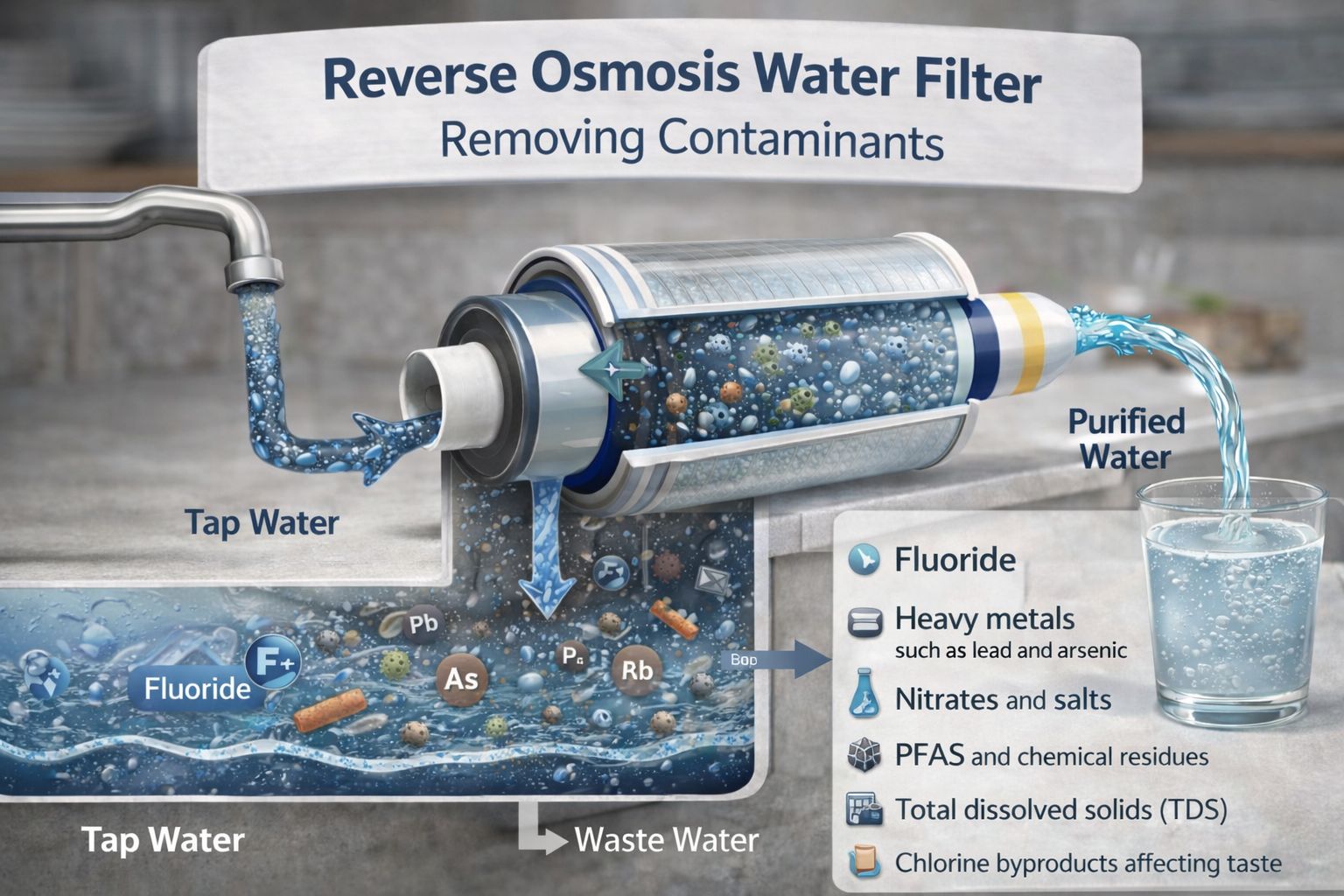
A reverse osmosis water filter uses a semi-permeable membrane with microscopic pores around 0.0001 microns in size. This allows water molecules to pass through whilst rejecting dissolved solids that other filters can’t capture.
Reverse Osmosis can reduce:
- Fluoride
- Heavy metals such as lead and arsenic
- Nitrates and salts
- PFAS and chemical residues
- Total dissolved solids (TDS)
- Chlorine byproducts affecting taste
This is why reverse osmosis is often recommended for drinking and cooking water, especially when fluoride reduction is a priority.
How Reverse Osmosis Fits into Home Water Filtration
Reverse osmosis systems are typically installed under the kitchen sink and supply purified water through a dedicated tap. Many Sydney homes combine RO with other water filter systems, such as:
- Whole-house filtration for chlorine and sediment
- Carbon filtration for taste improvement
- UV treatment for microbial protection
- Reverse osmosis for ultra-fine purification
This layered approach provides excellent water quality throughout the home whilst delivering the highest level of filtration where it matters most.
Should Sydney Homes Consider Fluoride Reduction?
Many Sydney homes rely on centrally treated water supplies, making point-of-use filtration a popular option for drinking water control. Sydney’s water supply is considered safe and meets fluoride safety standards, but preferences vary. Some households are comfortable with fluoridation, while others prefer filtered drinking water free from added compounds. Installing a reverse osmosis system doesn’t replace municipal treatment. It simply gives you control over your own water.
For homeowners seeking choice, improved taste, and reduced dissolved solids, reverse osmosis filtration offers a proven solution.